Loading the saved draft. Editing and export will be available when it is ready.
Abstract
A three-session user study was conducted with university students, most of whom had no prior experience with mixed reality or mallet percussion. Participants demonstrated adoption of foundational techniques, high levels of accuracy during physical performance assessments, and successful transfer of skills between virtual and physical performance contexts. Participants also highlighted the value of visual learning aids, guided instruction, and opportunities for independent exploration within the environment.
The findings provide empirical evidence supporting the feasibility of skill transfer within Musical Metaverse instrument-learning experiences and demonstrate the potential of pedagogically framed digital twin environments to support early-stage musical skill development. More broadly, this work contributes to ongoing discussions surrounding music learning, representation, and embodied interaction within emerging Musical Metaverse environments.
Keywords: Musical Metaverse; Mixed Reality; Mallet Percussion Pedagogy; Digital Twin; Skill Transfer
Introduction
As a former band director, I encountered firsthand the limitations of access to mallet percussion instruments. With a limited budget, I resorted to building a vibraphone and marimba from scratch to support student practice and development. This experience revealed a persistent challenge: access to full-sized mallet percussion instruments is often constrained by cost, space, and availability. Portable alternatives such as bell kits provide only partial access, lacking the range and spatial complexity needed to develop technique, coordination, and musical fluency. As a result, many percussionists have limited opportunities for sustained, embodied practice outside of rehearsal contexts.
1At the same time, the emergence of extended reality and the Musical Metaverse introduces new possibilities for music performance and pedagogy. As a virtual space where users interact through avatars, the Musical Metaverse can reshape how learners engage with instruments, instruction, and one another. Embodied presence in these environments may strengthen motivation and engagement, while also enabling more accessible and inclusive forms of musical participation. Beyond individual practice, such systems also point toward future possibilities in networked collaboration and shared musical spaces.
This growing technical shift raises a central question: can mixed reality systems meaningfully expand access to complex instruments like mallet percussion while supporting real-world skill development and transfer? Mallet percussion presents a particularly demanding case for such environments. It requires full-body coordination, spatial navigation across a multi-octave layout, and the development of motor patterns tied directly to physical geometry. Supporting this interaction in virtual space demands not only accurate sound reproduction, but also spatial fidelity, interaction realism, and purposeful feedback.
1However, while musical XR systems continue to advance technically, many approaches prioritize system capability over pedagogical understanding. In educational XR environments, before addressing challenges such as networking and multi-user interaction, it is necessary to first understand how learners engage with virtual instruments within the Musical Metaverse and whether these experiences translate beyond. This paper argues that instruments within the Musical Metaverse, designed as embodied digital twins paired with pedagogical framing, expand access to musical training while supporting meaningful skill transfer to real-world performance. To investigate this claim, I present Mallets in Reality, a mixed reality environment for mallet percussion performance and guided learning experiences.
Through a three-session user study, this work examines my argument. The findings contribute empirical evidence to the development of Musical Metaverse systems, particularly in embodied interaction, digital twin design, and mallet percussion pedagogy. More broadly, this study positions pedagogy-driven design facilitated by representational figures such as avatars, as a critical foundation for future Musical Metaverse learning experiences.
2Related Works
Musical Metaverse and Virtual Avatars
Embodied Interaction and Musical Learning in XR
Percussion Systems and Gaps in XR Instrument Design
Methods
Mallets in Reality is designed not only as a virtual instrument, but as an instructional system grounded in embodied learning and representation. Central to this work is the use of full-body avatars to support both pedagogical clarity and inclusive representation within mallet percussion and music education.
1Instructional Framing and Representation
Mallet percussion instruction is highly visual and embodied, relying on nuanced demonstrations of posture, grip, stroke type, and spatial navigation across the instrument. Traditional instructional media on flat screens often limit this visibility, particularly in ways that obscure full-body technique or fail to adapt to individual learners. In contrast, embodied avatars in virtual environments enable instruction to be recorded, replayed, and spatially aligned with the learner's own instrument configuration, supporting more accessible and repeatable learning experiences. To support this, the instructional system consists of a full-body avatar animation recorder, object transform recorder, and voice recorder unified into a single component, enabling performance gestures and verbal guidance to be captured as cohesive, reusable assets. An Animation Player component sequences these recordings using state-based logic and dynamically adapts them to each user's instrument height and scale, ensuring consistency across personalized configurations.
Equally important is the role of avatars in expanding representation within the field. Public education in the United States remains demographically imbalanced. National data from a 2020-2021 study indicate that roughly 80% of educators identify as White, while student populations have become significantly more diverse, highlighting a persistent representation gap [@schaeffer_key_2024]. Within this context, mallet percussion instruction often reflects a similarly narrow set of visible models in both educational materials and performance spaces [@bettelheim_racialethnic_2023]. This system intentionally positions avatars as a flexible representational layer, allowing for the inclusion of diverse identities and instructional voices. In doing so, this work responds to broader issues of access and belonging by enabling learners to see themselves reflected within instructional content.
Instrument Design and Implementation
In the first phase of development, the marimba was selected as the primary instrument to establish a framework for realistic interaction and visualization that can extend to other mallet instruments. The simulation targets core physical and acoustic behaviors, including bar geometry, spatial layout, articulation, and timbral variation.
2Physical Dimensions and Spatial Fidelity
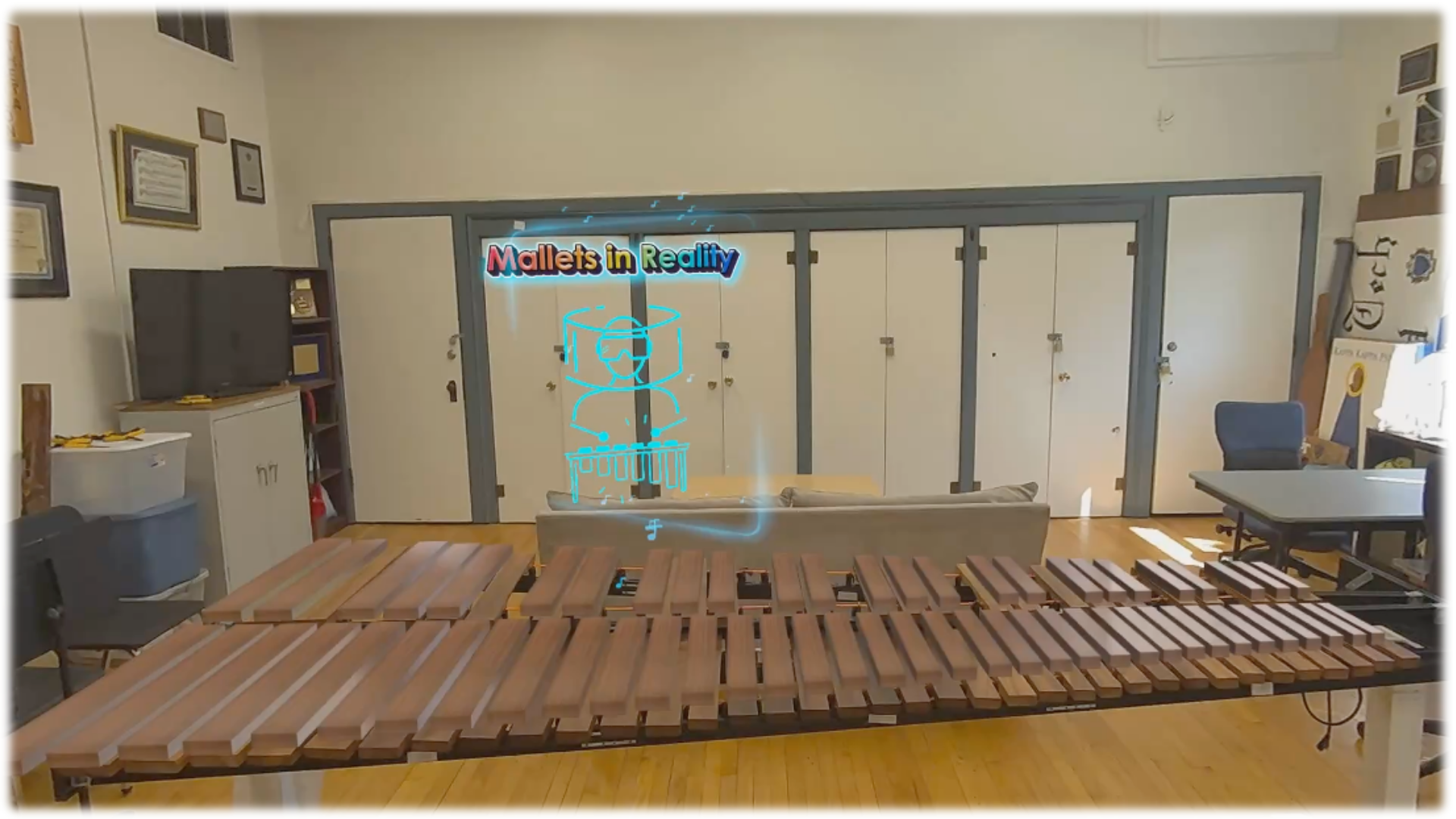
A one-to-one dimensional mapping between the physical and virtual instrument (Fig. 1{reference-type="ref" reference="fig:one_to_one_dimensions"}) preserves spatial continuity and supports accurate motor transfer between environments. The system is modeled as a digital twin of a full-sized 5-octave marimba [@la_favre_marimba_2007]. While resonators are acoustically significant in physical instruments, they are omitted[^1] in the virtual environment.
Bar Interaction and Articulation
To approximate acoustic responsiveness, three articulations are defined: normal, dampened, and node, corresponding to open resonance, immediate damping, and nodal striking techniques [@ren_tabletop_2012]. These interactions are implemented using Unity's collider system. To address limitations in Unity's predictive collision handling, particularly during fast rhythmic passages, the collider width of each bar is reduced. This minimizes unintended double-triggering during rapid lateral movement while preserving reliable strike detection.
Mallet Interaction
Unlike other percussive XR systems, mallets in this environment are not pre-positioned. Users can freely grab mallets, after which the system constrains hand positioning to reflect recommended grip technique. This approach supports guided skill development while maintaining user agency. Future iterations will allow these constraints to be relaxed to support accessibility and alternative playing styles.
Haptic and Visual Feedback
Haptic feedback is implemented using controller vibration mapped to stroke velocity at the moment of impact. Rather than relying on audio-driven haptics [@meta_meta_2023], this method directly reflects collision intensity, providing responsive feedback that reinforces dynamic control [@gao_enhancing_2025; @willemsen_haptic_2020]. To further support dynamic awareness, each mallet includes a visual meter indicating strike intensity (Fig. 2{reference-type="ref" reference="fig:dynamics_visual"}).
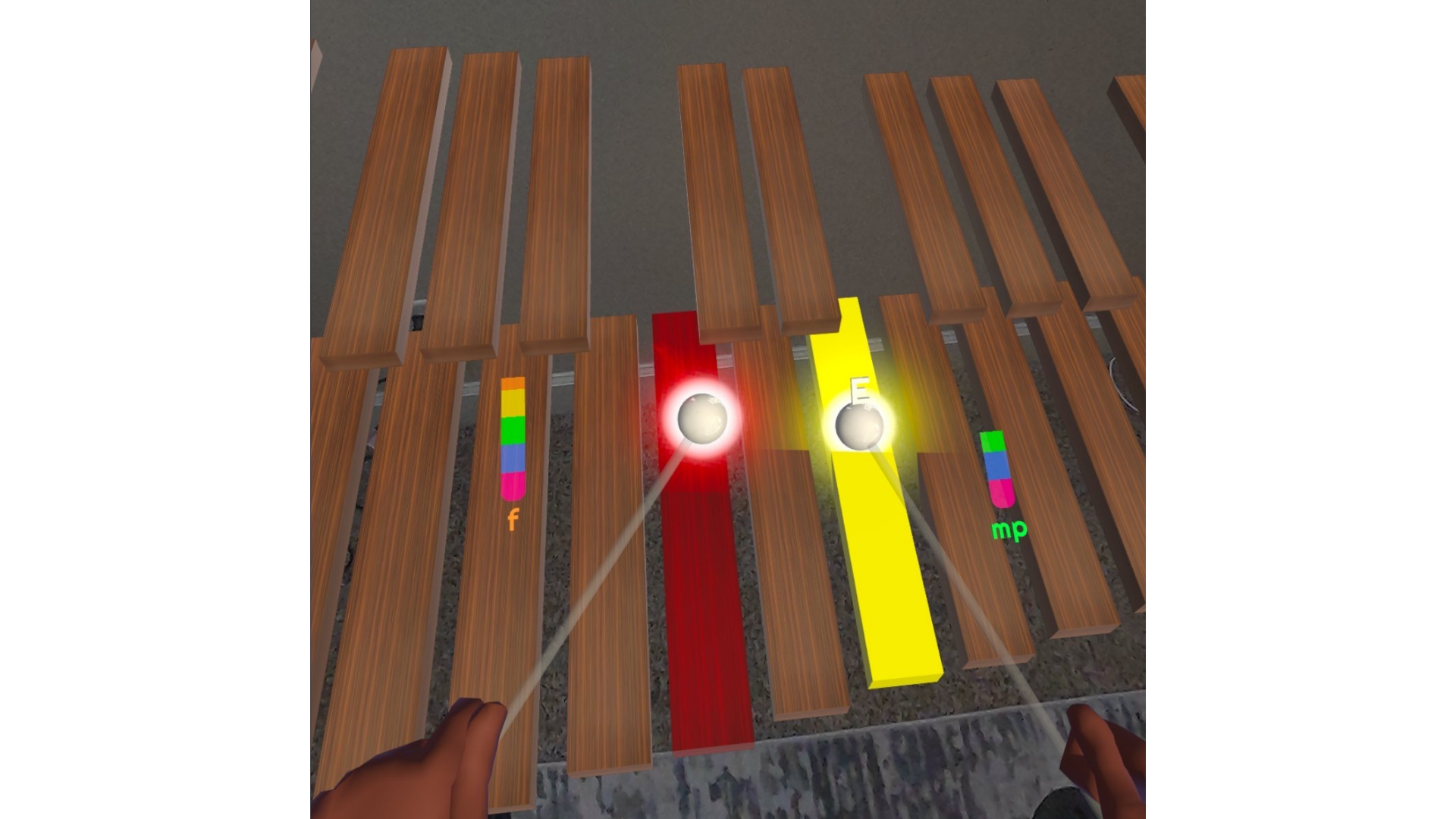
The calibrated dynamic range encourages appropriate playing force, promoting technique development while discouraging excessive impact that could transfer poorly to physical instruments.
Sound Production
Sonic realism is achieved using a SoundFont-based system integrated through a FluidSynth backend [@peter_hanappe_fluidsynth_2000]. The marimba patch from [@daindune_malletssectiongm_2023] is triggered using a MidiStreamPlayer component [@paxsteller_maestro_2024]. Running FluidSynth on a separate processing thread supports stable low-latency performance, a critical requirement for interactive musical systems [@pai_neuraldrum_2020; @turchet_networked_2022; @schlagowski_wish_2023]. The SoundFont format also enables compact file sizes and scalable instrument libraries without requiring additional mapping.
Flexible Design and User Autonomy
The system supports both seated and standing use, thumbstick locomotion, and global instrument scaling to accommodate different user needs and physical contexts. Instrument height is estimated from controller position and can be adjusted dynamically, with all interface elements updating accordingly. These features support autonomous learning by enabling users to explore the instrument at their own pace and within their own physical constraints, aligning with the system's goals of accessibility and learner-centered design within the Musical Metaverse.
User Study
A user study, approved under IRB protocol number: \\\\\\\, was conducted to investigate skill development and transfer within Mallets in Reality*. The study examined how musical and motor skills acquired through interaction with a mixed reality marimba translated to performance on a physical instrument. Particular attention was given to technique adoption, scale performance, learner engagement, and participants' experiences navigating between virtual and physical learning contexts. Through three instructional sessions, the study explored how embodied interaction within a Musical Metaverse environment can support early-stage mallet percussion learning and skill transfer between virtual and physical performance contexts [@zhong_literature_2023; @juntunen_embodied_2020].
Population
Ten university students participated in the study and represented a range of academic backgrounds across the arts, sciences, and engineering disciplines. Two participants reported prior percussion experience, while the remaining participants described limited or no experience with mallet percussion. Participants were recruited through university communication channels and completed a pre-study questionnaire before participation. Eight participants completed all three study sessions and were included in the final analysis. Two participants who did not complete the full study protocol were excluded from the reported results.
2Procedure
The study took place in a controlled setting equipped with a physical 5-octave marimba and a Meta Quest 3 headset running all session builds of Mallets in Reality. A KKCOBVR Q3 PRO headstrap was used to improve comfort and accommodate users wearing corrective lenses, as shown in Fig. 3{reference-type="ref" reference="fig:vr_headstrap"} [@kkcobvr_kkcobvr_2023].
1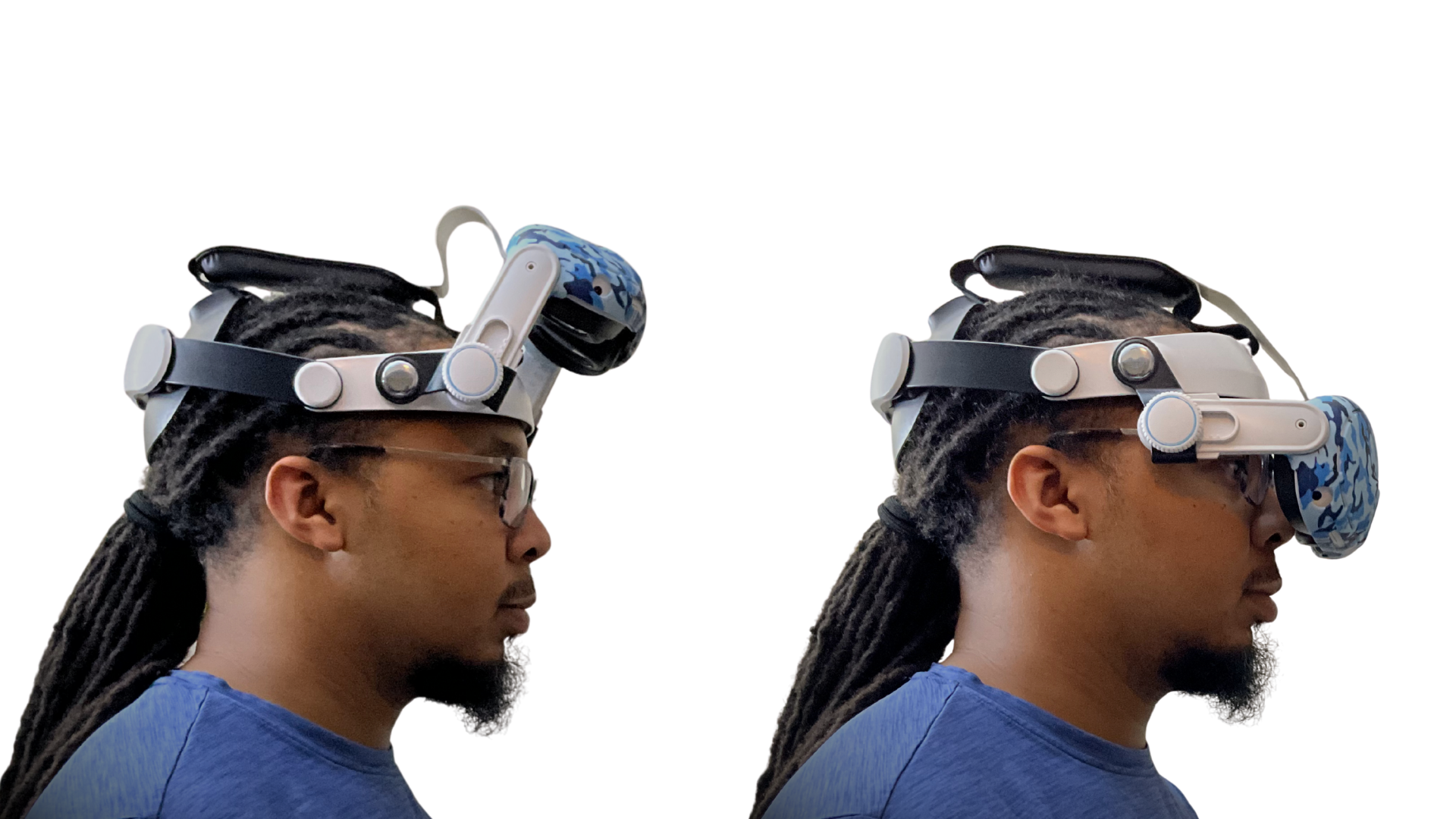
Meta Quest 3 controllers were used as virtual mallets during all mixed reality interactions. Before each session, participants received an overview of the study procedures, the mixed reality environment, and the physical instrument.
1Across three sessions, participants progressed through cycles of instruction, guided practice, independent exploration, and performance assessment. Activities were intentionally structured to alternate between virtual and physical performance contexts, allowing skills introduced in mixed reality to be subsequently evaluated on a physical marimba.
2Data collection included researcher observations, performance assessments, and post-study survey responses. Following completion of all study sessions, participants completed a post-study survey examining learning experiences, instructional effectiveness, engagement, accessibility, and perceived realism.
3Session 1
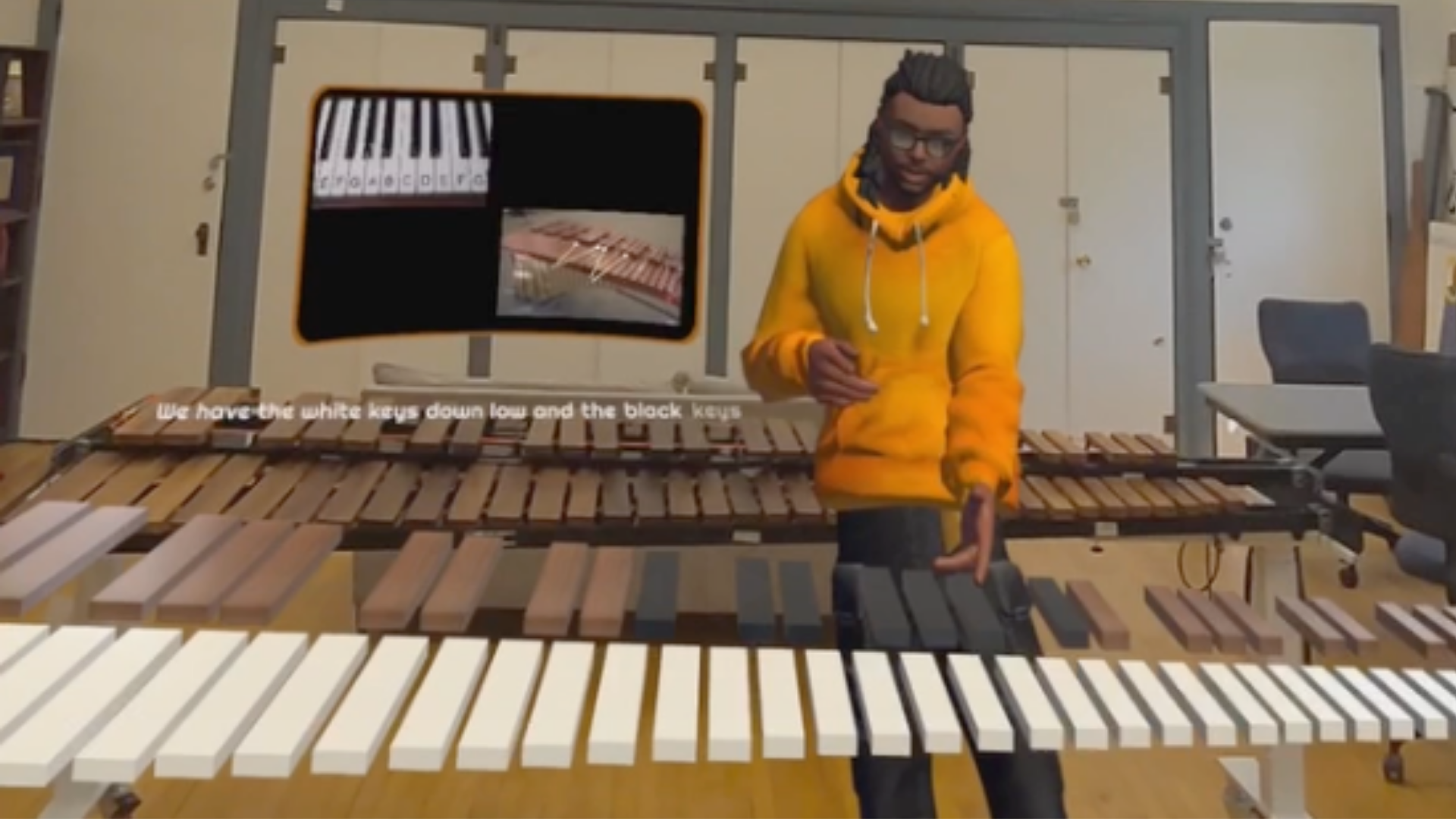
The first session introduced participants to the study environment and foundational mallet percussion concepts within the Musical Metaverse. As shown in Fig. 4{reference-type="ref" reference="fig:piano_marimba"}, participants were guided by a virtual avatar through an overview of common mallet instruments, their sounds, and the keyboard layout of the marimba in relation to the piano.
Participants then completed an introduction to virtual controls, mallet interaction, and instrument height adjustment. Visual feedback mechanisms were used to reinforce proper hand orientation and playing position.
The avatar subsequently led participants through a call-and-response instructional sequence covering fundamental striking mechanics, alternating strokes, and performance of the C-major scale. Rote instruction was selected to support accessibility across varying levels of musical experience [@grey_rote_2020].
Following guided instruction, participants were given time to freely explore the virtual instrument and experiment with mallet interaction, sound production, and spatial navigation across the marimba. This exploration period was intentionally included to support learner agency and autonomous engagement within the Musical Metaverse environment.
After exploration, participants transitioned to the physical marimba and were asked to demonstrate the techniques introduced in mixed reality. Researcher observations focused on technique adoption, including hand orientation, wrist motion, and alternating strokes, as well as participants' ability to transfer scale patterns from the mixed reality environment to the physical instrument. The session additionally examined the effectiveness of visual feedback mechanisms for reinforcing proper technique and monitored participant comfort while using the headset over time.
Session 2
The second session expanded upon the foundational skills introduced in Session 1 by focusing on rhythmic performance, chromatic navigation, and movement across the instrument. Participants began with an interactive song activity using vertically moving visual cues to represent rhythm and pitch. Each pitch was color-coded using the Boomwhackers Tuned Percussion Tubes chromatic color scheme [@rhythmbandinstrumentsllc_boomwhackers_2009], consistent with the color system applied to the virtual marimba bars.
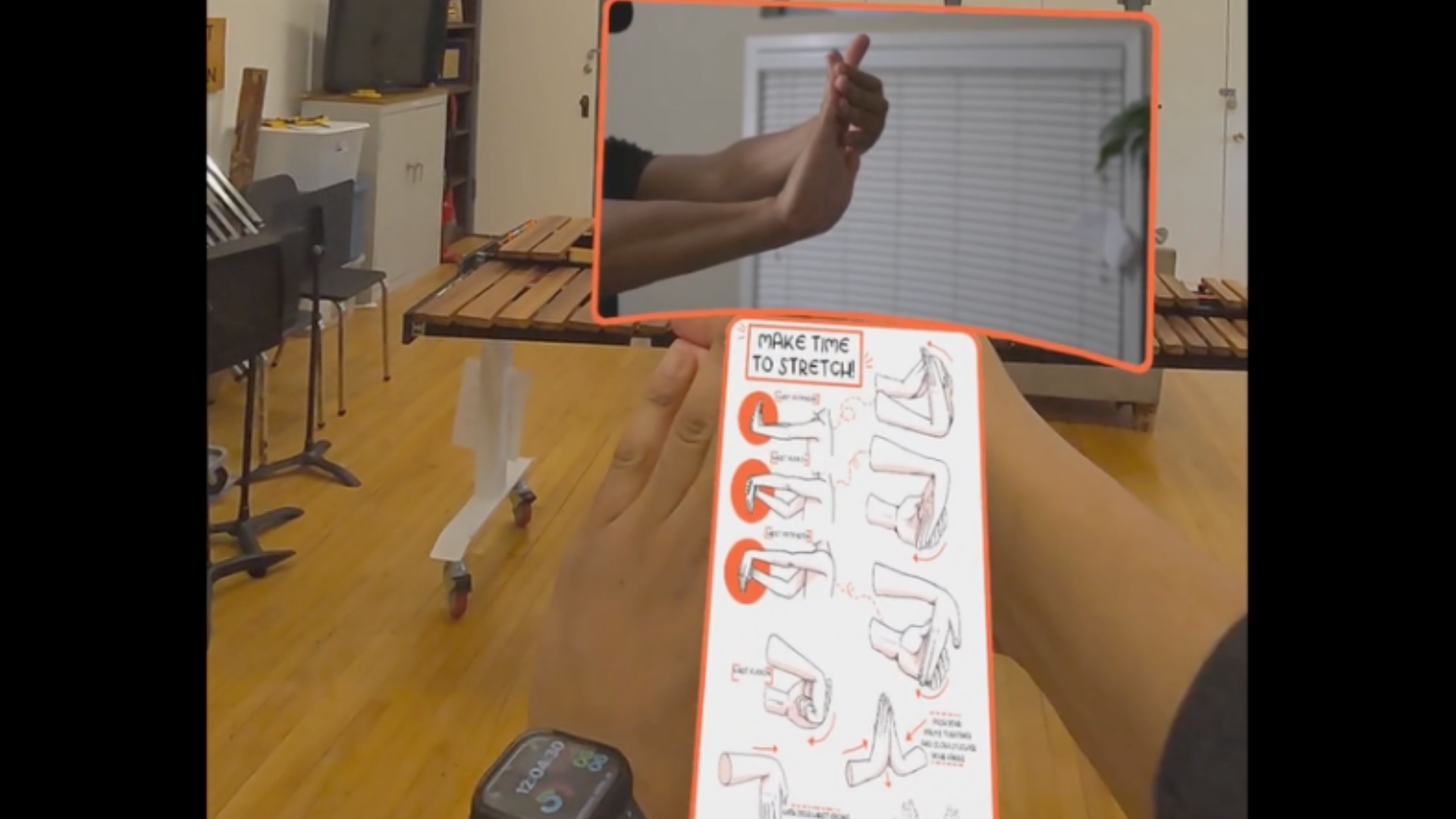
As shown in Fig. 5{reference-type="ref" reference="fig:stretching"}, participants then completed a brief stretching routine presented through a pre-recorded instructional video in MR to encourage healthy playing habits and reduce injury risk [@workman_percussionists_2006].
Participants then transitioned to the physical marimba, where instruction focused on performance of the chromatic scale across the full 5-octave instrument, including note grouping, hand shifting between manuals, and foot positioning for efficient movement across the keyboard.
Following physical instruction, participants returned to the mixed reality environment for five minutes of self-guided practice. The session concluded with a physical assessment of chromatic-scale performance.
Researcher observations focused on participants' use of visual learning aids, chromatic-scale navigation, hand-shifting strategies, and the transfer of movement patterns between virtual and physical performance contexts.
Session 3
The third session emphasized the integration of virtual and physical learning environments. Participants performed on the physical marimba while receiving instruction through the mixed reality system. The MR headset feed was displayed on a monitor positioned in front of the instrument, and audio was routed through room speakers, allowing the Musical Metaverse environment to function as a live instructional medium alongside the physical instrument. Participants received instruction on the B-flat and E-flat major scales, as shown in Fig. 6{reference-type="ref" reference="fig:mixed_setup"}.
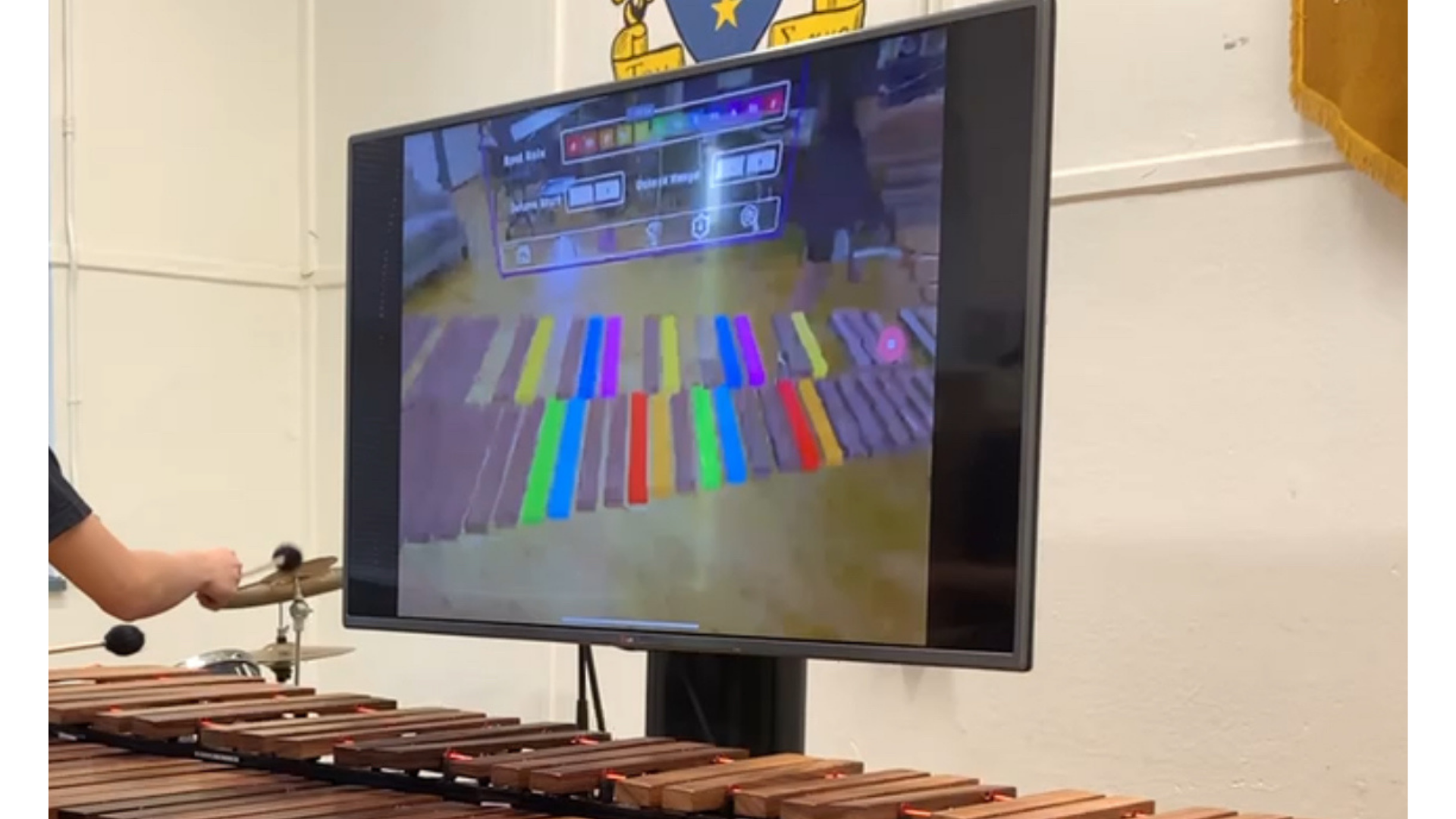
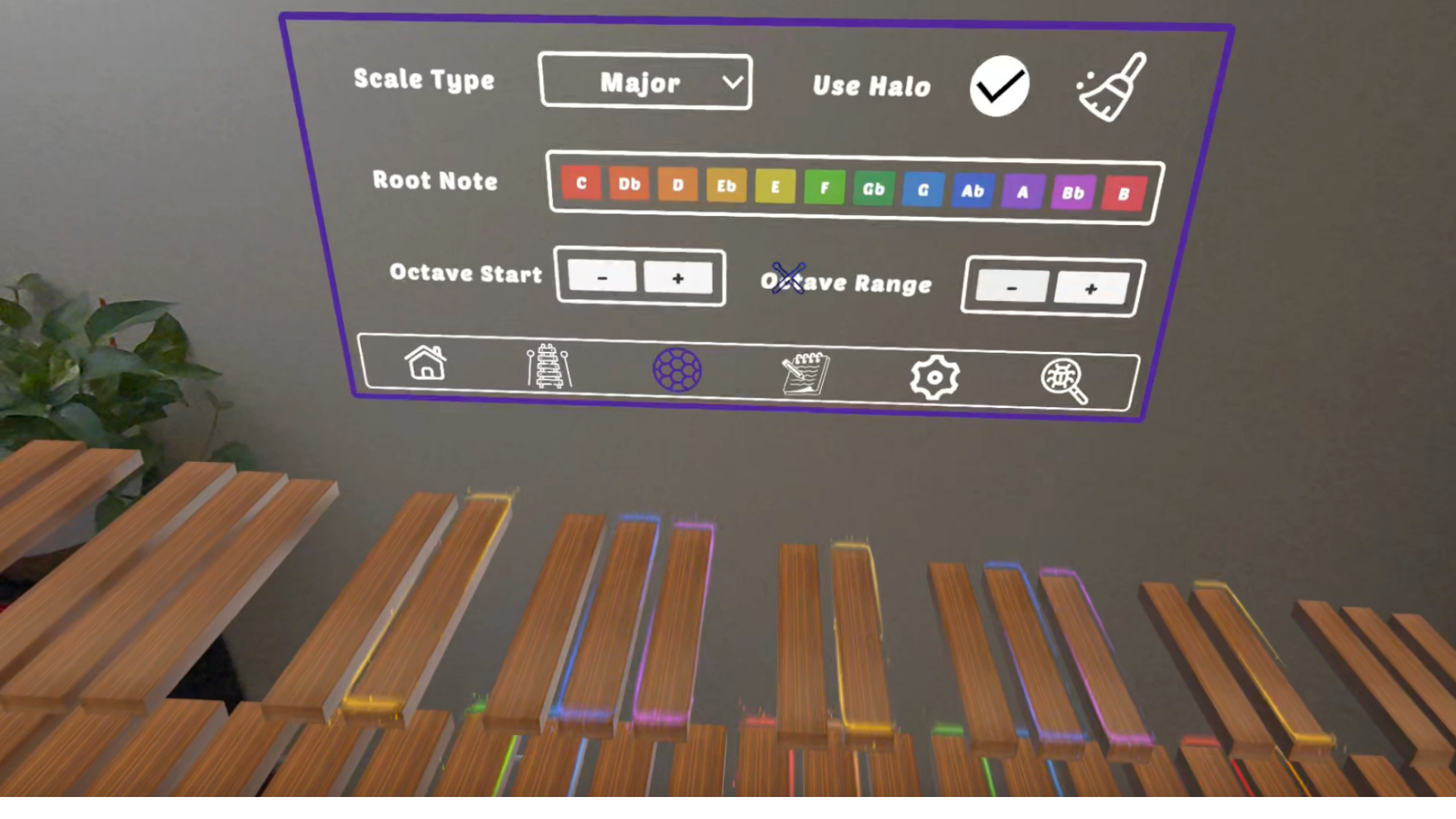
Following this instruction, participants were introduced to the assistive scale tools available within the mixed reality environment, shown in Fig. 7{reference-type="ref" reference="fig:scale_ui"}. Two visualization modes were presented:
Normal: All bars within a selectable range are illuminated to indicate scale notes. Striking a highlighted note returns the bar to its unlit state.
Halo: All bars within a selectable range are outlined with an illuminated border to indicate scale notes. The halo remains visible after a note is struck.
Participants were then given five minutes of self-guided practice using the scale interface as a visual aid. The session concluded with a physical assessment of the B-flat and E-flat major scales.
Researcher observations focused on participants' use of the visual scale aids, integration of virtual and physical instruction, and performance of the major scale patterns across both learning environments.
Results
Technique Adoption and Early Skill Development
Three technique-related measures were coded from Session 1 observations: hand orientation, wrist motion, and alternating strokes. The proportion of participants demonstrating each technique correctly is shown in Table 1{reference-type="ref" reference="tab:s1technique"}. Most participants successfully adopted the foundational performance techniques introduced during instruction, with full adoption observed for wrist motion and high levels of adoption observed for hand orientation and alternating strokes.
{#tab:s1technique}
  **Technique Measure**    **% Correct**
  ----------------------- ---------------
  Hand orientation             87.5%
  Wrist motion                 100%
  Alternating strokes          87.5%

: Session 1 Technique Adoption (N = 8)Participant reflections further supported these observations. When asked what they learned during Session 1, participants frequently referenced proper mallet grip, wrist rotation, hand position, and striking technique. One participant reported learning "the correct way to hold the mallets; how to control the virtual instrument" (P2, Q3.6), while another highlighted "playing position of the hands" and "rotating the wrists" as meaningful takeaways (P3, Q3.6). A third participant specifically noted that the visual reminder system reinforced correct technique, stating "Just reminding me to play palms down!" (P5, Q3.6). Several participants also referenced learning proper sticking patterns and mallet control. For example, one participant described learning "the correct sticking for scales" (P5, Q44), while another reported learning "whether to start with left or right hand depending on how many octaves to play" (P2, Q44).
Transfer Between Virtual and Physical Performance
Following mixed reality instruction and practice, participants completed a series of performance assessments on the physical marimba. Accuracy remained high across all transfer tasks, including the Session 1 C-major scale, Session 2 chromatic scale, and Session 3 B-flat and E-flat major scales. A summary of physical performance measures is shown in Table 2{reference-type="ref" reference="tab:transferperformance"}.
2{#tab:transferperformance}
**Task** **Mean** **SD** **Range**
----------------- ---------- -------- --------------
C-major scale 0.992 0.024 0.933--1.000
Chromatic scale 0.981 0.020 0.950--1.000
B-flat major 0.967 0.050 0.867--1.000
E-flat major 0.975 0.050 0.867--1.000
: Physical Instrument Performance Across Transfer Tasks (N = 8)Participant reflections frequently referenced the transition between virtual and physical performance contexts. One participant noted that after removing the headset and playing a physical marimba, "it felt like I understood the instrument and the only calibration I really had to do was the force I applied to the wooden keys as opposed to the VR keys" (P6, Q3.6). The same participant later reported that "practicing in VR definitely improved my real-world playing" (P6, Q43).
Participants also highlighted skills related to movement and navigation across the instrument. One participant described learning "the action of shifting hands when playing chromatic scale; the stepping needed to reach further notes" (P2, Q43), while another reported learning "switching the positions of the hands when going up and down the chromatic scale" (P3, Q43).
Visual Supports and Learning Aids
Participants frequently referenced visual learning aids when describing their experiences with the mixed reality environment. Commonly cited features included color-coded bars, note labels, falling-note visualizations, scale highlighting, and halo indicators. These visual supports were introduced throughout Sessions 2 and 3 to assist with note identification, scale navigation, and rhythm performance.
Several participants described the color-coding and highlighting systems as particularly helpful for understanding note relationships and scale patterns. One participant identified "the halos and color-coding of some of the mallet keys to show scales" because "it allowed me to follow the visuals and play right away" (P3, Q4.5). Another participant cited "AR features such as alphabetic labels placed on keys, highlighting of keys, \[and the\] virtual instructor" as major strengths of the application (P2, Q7.3).
Participants also discussed the falling-note visualizations introduced during Session 2. One participant reported that "falling notes felt like playing a rhythm game, and it was exciting" (P4, Q43). Another identified "Session 2 falling notes" as one of the most engaging aspects of the experience (P4, Q4.5). Several participants further referenced the scale visualization tools introduced during Session 3, noting that repeated practice with color-coded scale notes supported learning and recall of major scale patterns. For example, one participant stated that "seeing the colors greatly helped in playing on the real marimba" (P6, Q44).
Engagement and Learner Agency
Following guided instruction in Session 1, participants were given the opportunity to freely explore the mixed reality instrument. Exploration times varied considerably, with a mean of 576.4 seconds (SD = 304.8), ranging from 150 seconds to the maximum allotted duration of 900 seconds. Several participants continued interacting with the instrument until the session time limit was reached.
Participant reflections frequently described the experience as enjoyable, engaging, and motivating. One participant summarized the experience as "It was a wonderful experience!" (P1, Q7.5), while another described it as "a genuinely fun experience playing with a marimba virtually" (P3, Q7.5). A third participant remarked, "This was a really creative experience that I found myself enjoying much more than I had initially anticipated!!!" (P5, Q7.5).
1Participants also highlighted opportunities for autonomous exploration and experimentation as positive aspects of the experience. One participant identified "the haptic feedback, color coding of notes, ability to experiment and play freely" as particularly engaging (P6, Q4.5), while another stated that "I enjoyed the free time to just play on the instrument" (P3, Q7.5). Consistent with these comments, participants frequently cited the ability to independently explore the virtual instrument, visual aids, and practice activities as strengths of the system.
Several participants additionally reported increased interest in learning mallet percussion. One participant stated that the application "made me feel very confident about playing the marimba in the future" (P6, Q7.5), while another reported that the experience "made me very curious to take on the marimba as an instrument that I could actually learn" (P10, Q7.5).
Accessibility and Perceived Realism
Participants frequently discussed accessibility when describing the value of the mixed reality environment. Several participants referenced the cost, size, and availability of mallet percussion instruments when considering potential applications of the system. One participant stated that the application was "Very useful in terms of accessibility" (P1, Q6.5), while another noted that it could be valuable "especially considering the high cost of physical mallet percussion" (P4, Q6.5). A third participant identified "Ease of use. Real physical instruments are expensive and hard to gain access to" as a major strength of the application (P5, Q7.3).
2Participants also described the system as a useful supplement when physical instruments were unavailable. One participant reported that "the VR application provides the accessibility and sound quality to physical mallet percussion instruments" while also providing educational resources directly related to performance practice (P6, Q6.5). Another participant emphasized that "the marimba is such a big instrument (and expensive too)" and viewed the application as a way of increasing access to an instrument that is often difficult to obtain (P10, Q6.5).
Participants generally described the virtual instrument as realistic while identifying areas for improvement related to physical interaction. Several participants specifically referenced mallet weight, impact sensation, and tactile feedback. One participant suggested "maybe more weight to the mallets?" (P6, Q6.6), while another noted that "the lack of weight balance in my hands … was a little distracting" (P8, Q2.6). Participants additionally referenced accidental strikes, collision sensitivity, and note-registration issues during performance. For example, one participant reported occasionally striking unintended adjacent bars (P3, Q2.6), while another noted that visual mallet contact did not always align with note activation (P5, Q4.6).
Despite these observations, participants frequently characterized the virtual instrument as realistic in relation to its educational purpose. One participant described the experience as "almost as effective as practicing in reality" for developing the movements associated with mallet percussion performance (P2, Q6.5), while another stated that the application "does a great job of providing access" to an otherwise difficult-to-access instrument (P10, Q6.5).
Discussion
Embodied Learning and Skill Transfer
Participants demonstrated strong adoption of foundational mallet percussion techniques and subsequently performed transfer tasks on a physical marimba with consistently high levels of accuracy. Throughout the study, they were able to connect virtual actions with real-world gestures. Together, these observations provide empirical evidence supporting the feasibility of skill transfer within Musical Metaverse systems and highlight digital twins as a promising framework for instrument-based learning experiences.
2Pedagogical Supports in Musical Metaverse Environments
Visual supports emerged as a recurring theme in participants' learning experiences. Across sessions, participants frequently referenced technique helpers, color-coded notes, falling-note visualizations, scale highlighting, and halo indicators as useful learning aids. Participant responses suggest that visual cues were most effective when paired with guided instruction, rather than as standalone additions, with several participants also highlighting the virtual instructor as a useful component of the learning experience. Visual scaffolding appeared particularly valuable for helping participants interpret note relationships, navigate unfamiliar instrument layouts, and connect abstract musical concepts to physical actions.
Access, Agency, and Supplementary Practice
Participants frequently referenced instrument cost, physical size, availability, and portability when discussing potential uses for the system. Most expressed that the system was a practical way to engage with mallet percussion when physical instruments were unavailable.
Participants also described the experience as enjoyable, engaging, and self-directed. The substantial variation in exploration times, combined with participant reflections regarding experimentation and free practice, suggests that learners engaged with the environment in ways that extended beyond required instructional activities and valued opportunities for independent exploration.
At the same time, participants generally viewed the system as a supplement rather than a complete replacement for physical instruments. Responses regarding realism frequently identified limitations related to haptic feedback, mallet weight, and tactile sensation. These comments highlight areas where the virtual experience differed from physical performance while still supporting early-stage learning activities.
1Limitations and Future Work
Several limitations should be considered when interpreting the findings of this study. First, the study included a relatively small participant population (N = 8), limiting the generalizability of the results. Second, because no pre-assessment was conducted, changes in participant performance over time cannot be directly quantified. Future studies incorporating pre-post comparisons or control conditions would provide stronger evidence regarding learning gains and transfer effects.
2Additionally, participants completed all activities in a controlled, partially researcher-guided setting and did not engage in extended independent practice outside the study environment. Future work may examine longer-term adoption patterns, retention of musical skills, and the effectiveness of self-guided learning experiences over extended periods of time. Future studies could also investigate the experience with percussionists exclusively, incorporating more challenging performance tasks and notated music scores.
Networked multi-user environments could allow a remote instructor and learner to interact within the same virtual performance space, expanding possibilities for remote music education. Additionally, the digital twin pipeline introduced in this study may be extended to other mallet percussion instruments. WebXR implementations could increase accessibility across a broader range of hardware platforms. Finally, adapting many of the visual support systems introduced here to experiences for AR/MR Smart Glasses, alongside use with physical mallet instruments, may provide additional insight into how pedagogical cues function across hybrid performance environments.
Conclusion
This study examined whether Mallets in Reality, a mixed reality environment designed for mallet percussion, could support early skill development and transfer between virtual and physical performance contexts. Across three instructional sessions, participants demonstrated adoption of foundational techniques, high levels of accuracy during physical performance assessments, and sustained engagement with the mixed reality environment. Participant responses also highlighted the value of visual learning aids, guided instruction, and opportunities for independent exploration.
Together, the findings provide empirical evidence that skills introduced within a mixed reality environment can transfer to physical mallet percussion performance. The study further illustrates how digital twin design, embodied interaction, and pedagogically framed learning experiences may support musical skill development within Musical Metaverse environments.
2More broadly, this work contributes an initial examination of skill transfer, instructional support, and learner experiences in a Musical Metaverse context. As these environments continue to evolve, empirical investigations of how musicians learn, practice, and engage with virtual instruments will remain important for understanding their role in music education and performance.
1[^1]: Resonators are excluded in the virtual environment to improve visibility in pass-through mode and support safe physical navigation, prioritizing interaction clarity while preserving spatial relationships.
As the Musical Metaverse emerges as a site for immersive musical pedagogy and embodied human-computer interaction, fundamental questions arise regarding how virtual instruments can support real-world skill development and transfer. Mallet percussionists in educational settings in the U.S. often face persistent barriers to instrument access, as full-sized marimbas and vibraphones are expensive, physically large, and rarely available outside institutional environments. This paper presents Mallets in Reality, a mixed reality marimba experience developed in Unity 3D and designed as a Musical Metaverse prototype for mallet percussion pedagogy. The system combines a one-to-one digital twin of a 5-octave marimba with avatar-guided instruction, visual learning aids, alternative notation systems, and assistive performance tools that support both guided and autonomous learning experiences.
4